Kühne Brand Guidelines
The 1722 Berlin vinegar maker behind Germany’s red cabbage.
Aa
Two constants: a red cabbage, gherkin green and mustard palette and a sturdy grotesque register. Abstract homage — not a Kühne product or mark; no jar, label or logo is reproduced.
A Berlin vinegar brewery
A widow’s sale, a fast new process and a royal warrant.
Kühne began as a vinegar brewery in Berlin. German and English Wikipedia both date it to 1722 and name its founder as Johann Daniel Epinius, and the company’s own history also starts with Epinius and “a small vinegar brewery.” According to both encyclopedias, Epinius’s widow sold the business in 1761 to Friedrich Wilhelm Kühne, and it has been in the Kühne family ever since.
German Wikipedia traces the generations. In 1832 Carl Ernst Wilhelm Kühne took over and introduced the Schützenbach process, a faster way of making vinegar. In 1867 the business passed to Carl Kühne, whose name the company still carries, and in 1876 Kaiser Wilhelm I appointed him a supplier to the royal court. Wilhelm Kühne succeeded his father in 1888.
The Berlin works grew with the family. German Wikipedia says a larger vinegar factory built in 1795 on Alte Jacobstraße, in today’s Kreuzberg, served as the production site for the next 40 years, until Kühne built a new and much larger factory on Neue Grünstraße in 1835. By 1939 the company had 20 branch works, mostly in the north, west and east of Germany.
Under those generations the business moved beyond vinegar. German Wikipedia dates mustard to 1896, mayonnaise to 1902, pickled gherkins to 1903 and sauerkraut to 1905, and the company says it introduced a herb vinegar, Surol, in 1906. English Wikipedia sums up the business that grew from the brewery as a maker of “vinegars and delicacies.”
Colour
War, a new headquarters and a jar of red cabbage.
The Second World War nearly ended the business in its home city. German Wikipedia says that by 1945 almost all of Kühne’s works were badly damaged or destroyed. The company’s branch in Hamburg became its new headquarters, and the company says it made a new start in Hamburg-Altona, where its headquarters, the Kühnehöfe, still stand. In Berlin a new plant opened in Reinickendorf in 1949. Hamburg had its own setback later: German Wikipedia says the vinegar factory at the Hamburg works burned down completely in 1995, and a year later Kühne began building a new vinegar factory in Hagenow, in Mecklenburg-Western Pomerania.
The product most associated with Kühne in Germany came soon after. German Wikipedia says that in 1957 Kühne became the first maker to put a ready-to-serve red cabbage on the German market, describing it as one of the first convenience products there; English Wikipedia also records Kühne as the first with ready-to-serve red cabbage. Gherkins, vinegar and mustard remain the core of the range, and English Wikipedia describes Kühne as one of Europe’s largest producers of vinegar, pickled gherkins and mustard, and lists its range as condiments, salad dressings, pickled vegetables and sauces. The company today presents itself with the promise “We Love True Taste.” On its history page it names, among its newer ideas, the MADE FOR MEAT grilling sauces, red cabbage in a pouch and a TrinkApfel drinking-vinegar mix, and it calls Surol, from 1906, one of its first branded products.
The company grew by buying, too. German Wikipedia says Kühne took over Tonoli, a mustard and vinegar maker from Steinach im Kinzigtal in the Black Forest, in 1969, and Oswaldowski GmbH in 2003, citing Lebensmittel Zeitung for the latter. English Wikipedia also records a sub-brand called ENJOY, launched in 2015.
Typography
Jars and documentation.
The seven brands in this group all make food, and all of them come from Germany or France: Dr. Oetker, Hengstenberg, Leibniz, Kühne, Seitenbacher, Bonduelle and Lesieur. German and French food brands in general sit at many different points in the trade, from family firms that still carry a founder’s surname to names that now belong to much larger food groups, and a single brand can be sold everywhere from a village grocer to a supermarket shelf.
A food brand’s identity is usually carried less by a single product than by a pack, a name and the meal or snack it promises, because the company behind the name may have changed hands, moved its factory or grown far beyond the town where it started. That makes the questions behind each name worth asking plainly: who started it, who owns it now, and where its food is actually made and packed.
Each guide separates what independent sources record from what the company says about itself — its founding story, its owners over time, where its products are made and how its packaging has changed — and marks plainly what rests only on the company’s own word.
Aa
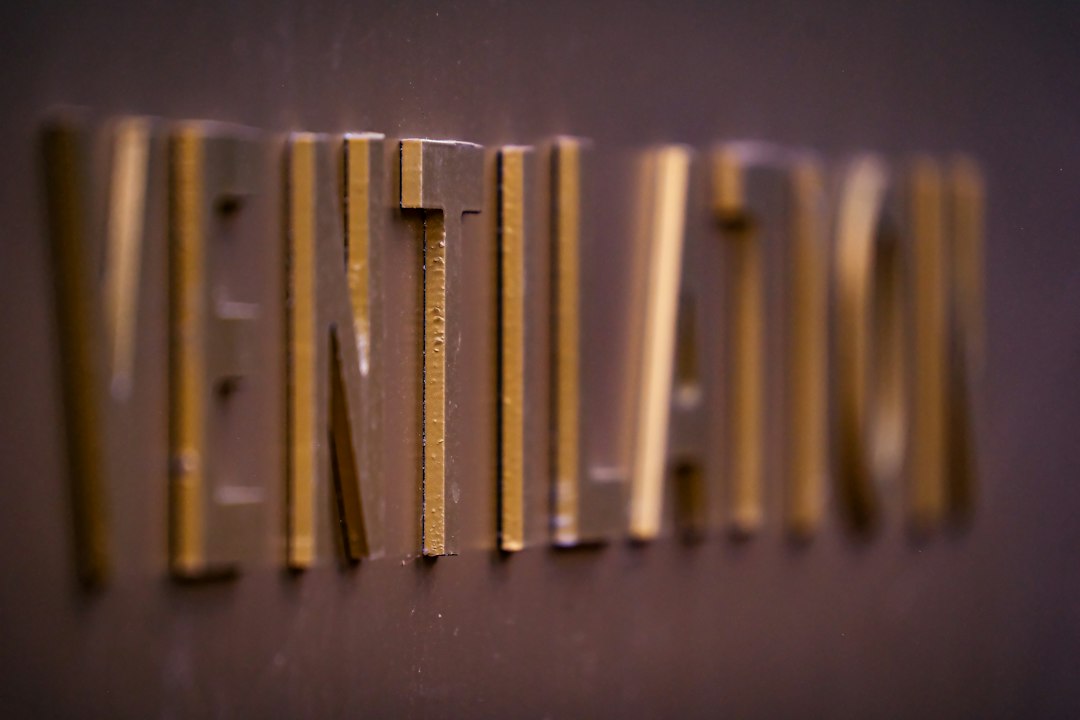
A sturdy grotesque for a pantry brand of jars and bottles. (Specimen set in Archivo, a sans STAND-IN; NOT the Kühne logo.)
Kühne
A family company in Hamburg with plants across Europe.
The company is Carl Kühne KG (GmbH & Co.), headquartered in Hamburg. German Wikipedia says it is wholly owned by seven members of the Kühne family, as of June 2024, and the company describes itself as a family business in its 11th generation. Carl Wilhelm Kühne was general partner from 1975 to 1993; both encyclopedias name Kai Bendix as head of the management today, and English Wikipedia lists Christian Strey for finance and Heiner Opdenfeld for supply chain alongside him.
Where the products are made is documented in some detail. German Wikipedia, as of 2022, lists five German plants — Berlin, Hagenow, Hamm, Schweinfurt and Straelen — and five abroad: Dijon in France, Wałbrzych in Poland, Izmir in Turkey, Kozarska Dubica in Bosnia and Herzegovina and Sremska Mitrovica in Serbia. English Wikipedia’s list differs, adding Cuxhaven and naming only Dijon and Izmir abroad, so the two sources do not agree in every detail. In 2008, German Wikipedia adds, the company opened a factory outlet at Straelen-Herongen, the town of one of its German plants. German Wikipedia says about two-thirds of sales are made in Germany and the rest abroad, and the company says it is active in 11 countries; German Wikipedia puts its market reach at more than 50 countries.
For a design guide, Kühne shows how a three-century-old vinegar name can carry a whole pantry of jars, from gherkins to red cabbage, under one family mark. Compare Develey, the Munich mustard maker, and Hengstenberg, another German maker of vinegar and pickles. For this guide we use a red cabbage purple, a gherkin green and a mustard yellow with a sans, an unofficial interpretation; no product or logo is reproduced.
Explore & save
Keep Kühne’s identity on hand — save it to a board in the Made Good inspiration library.
Kühne identity set
Pin the Kühne red cabbage, gherkin green and mustard palette and the sturdy grotesque register to your own board.