Tomatin Brand Guidelines
The Highland malt from south of Inverness, distilled since 1897.
Aa
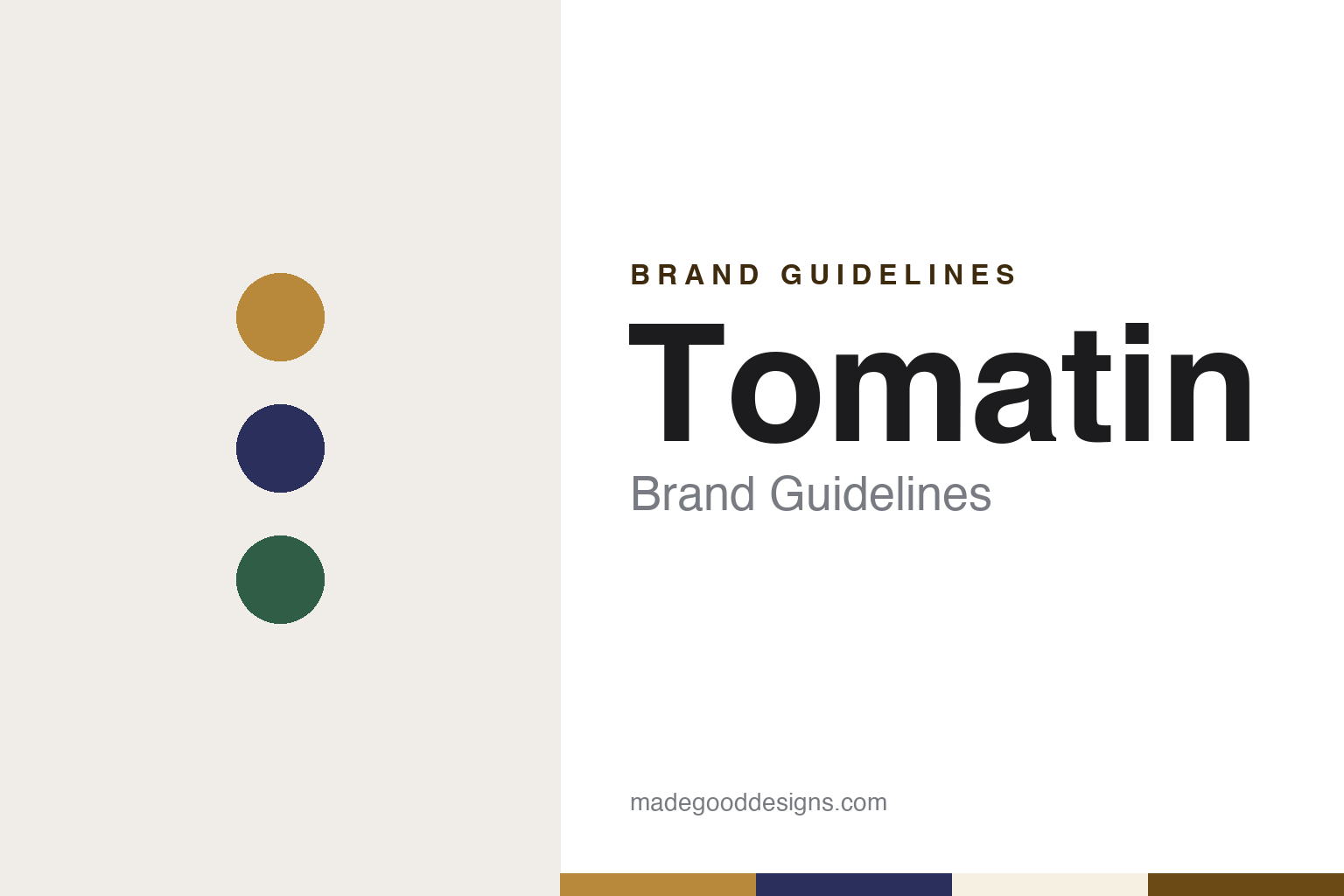
Two constants: an oak gold, indigo and forest green palette and a classical serif register. Abstract homage — not a Tomatin product or mark; no label, logo or bottle is reproduced.
A Highland distillery that grew, shrank and changed hands
From a two-still distillery to a Japanese-owned single malt.
Tomatin is a single malt Scotch whisky distilled in the village of Tomatin, about 25 minutes south of Inverness, and its whisky is classified as Highland, English Wikipedia says. The distillery draws its water from the Allt na Frìthe burn. English Wikipedia, citing the company’s own history, dates the distillery to 1897, when it was set up under the name Tomatin Spey Distillery Co Ltd. The first business did not last: it went bankrupt in 1906, and the distillery reopened under new owners in 1909.
For half a century Tomatin was a small operation with two stills. Expansion began in the late 1950s, and the Scotch whisky reference site Scotchwhisky.com says the still count rose to 23 by 1974. English Wikipedia puts production in the 1970s at about 12.5 million litres a year, and the whisky writer Michael Jackson called it the largest malt distillery in Scotland in his World Guide to Whisky (Dorling Kindersley, 1987). Stills have been taken out since the mid-1980s, and English Wikipedia gives the present capacity as just over five million litres a year.
The company behind that expansion collapsed in 1985. Scotchwhisky.com says two of the distillery’s bulk customers, the Kyoto drinks company Takara Shuzo, which had been importing Tomatin whisky since the 1960s, and the Tokyo trading company Okura & Co, formed the Tomatin Distillery Company to save it, and that in 1986 Tomatin became the first distillery in Scotland wholly owned by Japanese companies. After Okura was declared bankrupt in 1998, it sold part of its stake to Takara Shuzo and the rest to the trading house Marubeni, the same source says. English Wikipedia and the Japanese parent’s own entry name Takara Shuzo as Tomatin’s owner today; Scotchwhisky.com adds that Kokubu & Co took on distribution of Tomatin whisky in 2006.
Colour
A landscape bottle, then a ring of oak.
For most of its life Tomatin sold more whisky to blenders than under its own name. English Wikipedia says around 80 percent of the spirit goes into blended whisky, including the company’s own blends The Antiquary and Talisman; Scotchwhisky.com says the Antiquary, a blend created around 1880, came with the purchase of the blender J&W Hardie in the late 1990s. The single malt was pushed harder from the 2000s: in 2003 a 12-year-old replaced the basic 10-year-old, English Wikipedia says.
The packaging has been redrawn three times in recent years. The Drum reported in October 2009 that Breeze Creative, with designer Craig Mackinlay, had redesigned the branding, an embellished bottle and the packaging for a “clean and fresh” look on a “less is more” approach, as a 15-year-old joined the 12, 18 and 25-year-old malts.
The bigger reset came in 2014 and 2015. Scotchwhisky.com reported in December 2015 that the brand had been repositioned in 2014 as “the softer side of the Highlands,” and that new packaging brought a more contemporary logo and earthier colours. The tall, slender bottle gave way to a shorter, broader shape with an embossed outline of a Highland landscape around its base, and the line “The Softer Side of the Highlands Since 1897” embossed around the shoulders. A marketing campaign called Tomatin Life supported the rollout, and the marketing manager, Jennifer Masson, called the packaging the final piece of a puzzle.
The latest change moved from landscape to wood. TRBusiness reported in March 2026 that Tomatin was rolling out a presentation box with a golden wood-grain motif based on the rings of a tree, a nod to its oak casks, in place of the earlier landscape-led visuals. Each whisky now carries its own bold colour, among them deep indigo, forest green, scarlet red and teal, and the labels use clearer product names; the 12 Year Old was renamed Triple Cask. Jennifer Masson, by then head of marketing, said the packaging reflects “what we do best at Tomatin.”
Typography
Design and documentation.
The seven brands in this group are all whisky, gin, grappa, calvados and rosé names: Tomatin, Jura, Edinburgh Gin, Roku, Poli, Boulard and Minuty. Spirits and wine brands in general sit at many different points in the trade, from family houses that still carry a founder’s name to labels that now belong to much larger drinks groups, and a single brand can be sold everywhere from a corner shop to a restaurant list.
A spirit or wine brand’s identity is usually carried less by a single bottle than by a label, a name and the place it promises, because the company behind the name may have changed hands, moved its production or grown far beyond the place where it started. That makes the questions behind each name worth asking plainly: who started it, who owns it now, and where its spirit or wine is actually made and bottled.
Each guide separates what independent sources record from what the company says about itself — its founding story, its owners over time, where its spirit or wine is made and how its labels have changed — and marks plainly what rests only on the company’s own word.
Aa
A classical serif for a Highland distillery name and a founding date. (Specimen set in Cormorant Garamond, a serif STAND-IN; NOT the Tomatin logo.)
Tomatin
A peated sideline, a Japanese parent and a name to spell carefully.
The distillery also makes a second single malt. Scotchwhisky.com says Tomatin launched the peated Cù Bòcan in 2013, and English Wikipedia describes it as a lightly peated malt produced for one week a year at the distillery. In August 2019 three limited Cù Bòcan editions followed, the same source says, among them a Creation release finished partly in casks that had held shochu, the Japanese spirit.
The Japanese parent explains part of that story. Takara Shuzo, the original business of the Kyoto-based Takara Holdings, makes sake, other drinks and seasonings, English Wikipedia says, and the holding company was formed in 2001. The trade site Drinks Intel credited Takara Shuzo International with the 2026 Tomatin packaging refresh.
The name needs care. Tomatin is easily confused with Tomintoul, a different Scotch distillery in Speyside, and English Wikipedia carries a note to tell them apart. Tomatin is also the name of the village itself.
For a design guide, Tomatin shows how a distillery that spent decades as a supplier to blenders built a bottled identity in steps: a cleaner pack in 2009, a slogan and a landscape bottle in 2015, and a ring of oak with a colour per whisky in 2026. Compare Suntory, the Osaka-founded Japanese drinks group, and The Glenlivet, the Speyside single malt. For this guide we use oak gold, indigo and forest green with a classical serif, an unofficial interpretation; no product or logo is reproduced.
Explore & save
Keep Tomatin’s identity on hand — save it to a board in the Made Good inspiration library.
Tomatin identity set
Pin the Tomatin oak gold, indigo and forest green palette and the classical serif register to your own board.