BOH Brand Guidelines
The Cameron Highlands tea garden started by J. A. Russell in 1929.
Aa
Two constants: a BOH tea-garden green and golden brew palette and a warm serif register. Abstract homage — not a BOH product or mark; no pack, label or logo is reproduced.
Cameron Highlands, 1929
A tin-and-rubber investor turns to tea.
BOH began in the Cameron Highlands, in the state of Pahang in what was then British Malaya, in 1929. English Wikipedia, the company and Malaysian press accounts agree on the year and the place, and on the founder: J. A. Russell, a British-born businessman who had arrived in Kuala Lumpur as a boy in the 1890s. The company calls him John Archibald “Archie” Russell; English Wikipedia gives his first name as James. Before tea, the company says, he had worked in mining and started businesses including a rubber company and a colliery, and spoke several Chinese dialects as well as Malay.
The timing was unpromising. The company says Russell started planting tea in the Great Depression, together with A. B. Milne, a veteran planter from Ceylon, now Sri Lanka, and English Wikipedia says the two were granted a land concession for the first garden at Habu, on steep, undeveloped jungle terrain. The company calls the result the first highlands tea garden in the country, and Malay Mail used the same description in 2024. Its first tea factory was built there in the 1930s, the company says.
The name comes from tea history. The company says “BOH” was taken from Bohea, the hills in Fujian province, China, also called the Wuyi hills, and that Bohea was also the name of a premium grade in the early China tea trade; it adds that “boh” means “precious happiness” in Mandarin. Russell did not see the business grow: English Wikipedia cites a Straits Times report of his death in April 1933. The company says his widow, Kathleen, insisted that BOH be kept despite financial difficulties.
Colour
War, the Emergency and a second generation.
The next two decades were hard. During the Second World War, the company and Malay Mail say, the estate was occupied by the Japanese and largely abandoned. After the war Russell’s son Tristan Russell joined the business, at 21 by the company’s account, and during the Malayan Emergency of 1948 to 1960 the Cameron Highlands plantations were, in the company’s words, prime “ambush territory.” The company says that after independence the founding family chose to stay in Malaysia while many British planters left.
Under Tristan Russell, who became chairman and whom Malay Mail called BOH’s longest-serving chairman, the business grew to four plantations. The best known of the later gardens is Sungei Palas, an estate the company says was formerly owned by Danish residents. Sources differ on when it was bought: the company’s home page and a 2021 interview in World Tea News say the 1950s, while the company’s own history timeline and a 2024 Malay Mail report place it in the 1960s. The company also credits Tristan Russell with modernising its factories and with creating Mr. BOH, a mascot it calls one of the first televised company mascots in Asia; that is its own claim.
The third generation is still in charge. World Tea News reported in April 2021 that Caroline Russell, Tristan’s daughter, joined BOH’s marketing department in 1988, later became general manager for downstream operations, took over management of the estates in 2002 and became chief executive in 2003; in that interview she described BOH as “a family business” and herself as executive chairman. In July 2024 Malay Mail again named her executive chairman and identified Jason Foo as chief executive of BOH Plantations.
Typography
Design and documentation.
The seven brands in this group make coffee, tea, noodles and sauces, and they come from Singapore, Indonesia, Japan, Vietnam and Malaysia: Prima Taste, Indocafe, Kopiko, Acecook, Chin-su, OLDTOWN White Coffee and BOH. Drink and food brands of this kind in general sit at many different points in the trade, from family firms that still carry a founder’s name to names that now belong to much larger food groups, and a single brand can be sold everywhere from a coffee shop counter to a supermarket shelf.
A drink or food brand’s identity is usually carried less by a single product than by a pack, a name and the cup or bowl it promises, because the company behind the name may have changed hands, moved its factory or grown far beyond the town where it started. That makes the questions behind each name worth asking plainly: who started it, who owns it now, and where its products are actually made and packed.
Each guide separates what independent sources record from what the company says about itself — its founding story, its owners over time, where its products are made and how its packaging has changed — and marks plainly what rests only on the company’s own word.
Aa
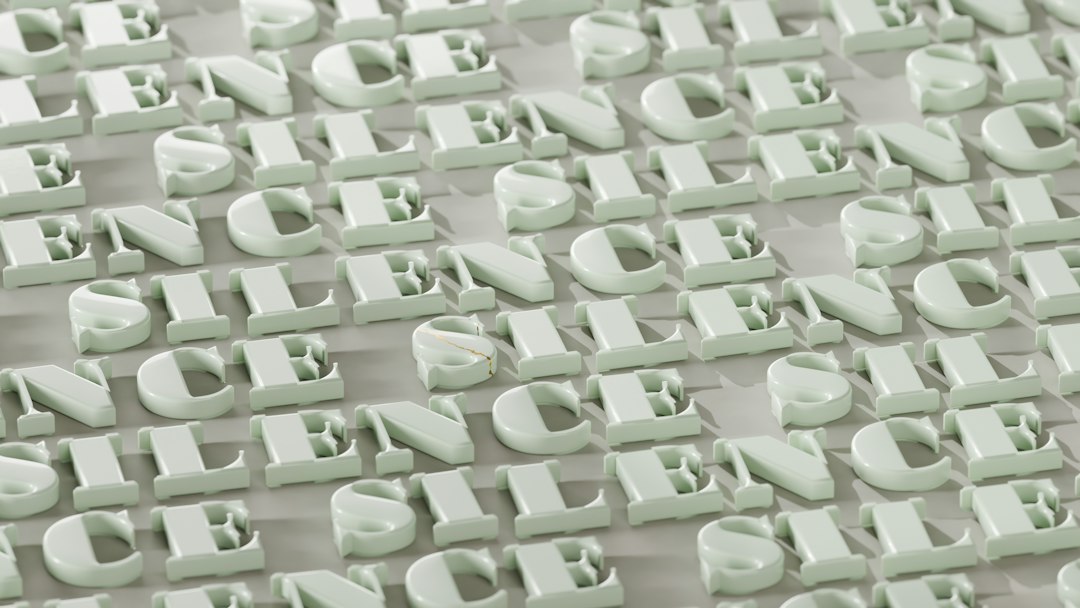
A warm serif — our register for a highland tea brand. (Specimen set in Fraunces, a serif STAND-IN; NOT the BOH logo.)
BOH
Grown, made and packed in Malaysia.
BOH presents itself as a tea company that controls every step. “We grow it, blend it, pack it and brand it,” Caroline Russell told World Tea News in 2021, adding that few tea companies are vertically integrated in that way; that is the company’s own account. English Wikipedia, citing the company’s website in 2016, listed four gardens — the original garden at Habu, Fairlie and Sungei Palas in the Cameron Highlands, and Bukit Cheeding in Selangor — covering about 1,200 hectares and accounting for about 70 per cent of Malaysian tea output. Malay Mail reported in 2024 that BOH’s Cameron Highlands land covered more than 1,000 hectares across three gardens, and that the company produced 2.8 million kilograms of tea a year. The company says its original garden alone spans more than 465 hectares, that rollers are still used at its Sungei Palas factory and that packing takes place at Bukit Cheeding.
Its best-known products, as Caroline Russell listed them in 2021, are BOH Garden Tea in pyramid bags, Cameronian Gold Blend and BOH Black Tea. Between 2010 and 2019, the company and Malay Mail say, it added instant tea mixes, including a less-sweet teh tarik, and a botanical range. In advertising, its most familiar line is “BOH Ada Ummph!”, which Malay Mail dates to the 1980s and the company says became a national hit; the brand still uses “Ummph!” in its social-media invitations. In 2002, the company says, it launched the BOH Cameronian Arts Awards with the arts website Kakiseni, honouring dance, theatre and music.
The company marked its 90th anniversary in 2019 with Tristan’s Terrace, a new section of the Sungei Palas tea centre named after its former chairman, and its 95th in July 2024 with a five-day roadshow at the 1 Utama shopping centre themed “95 and Brewing for Tomorrow,” Malay Mail reported. The company says it has been reducing plastic in its packaging and sourcing paper from sustainably managed forests; that too is its own claim. Its website is bohtea.com; older pages sat at boh.com.my.
For a design guide, BOH shows how a family plantation can carry a short name, a tea-garden landscape and a single tagline across nearly a century. Compare Teh Botol Sosro, Indonesia’s bottled tea, and OLDTOWN White Coffee, another Malaysian drinks brand. For this guide we use tea-garden green and a golden brew with a serif, an unofficial interpretation; no product or logo is reproduced.
Explore & save
Keep BOH’s identity on hand — save it to a board in the Made Good inspiration library.
BOH identity set
Pin the BOH tea-garden green and golden brew palette and the warm serif register to your own board.