Materne Brand Guidelines
The Namur jam name that became two companies.
Aa
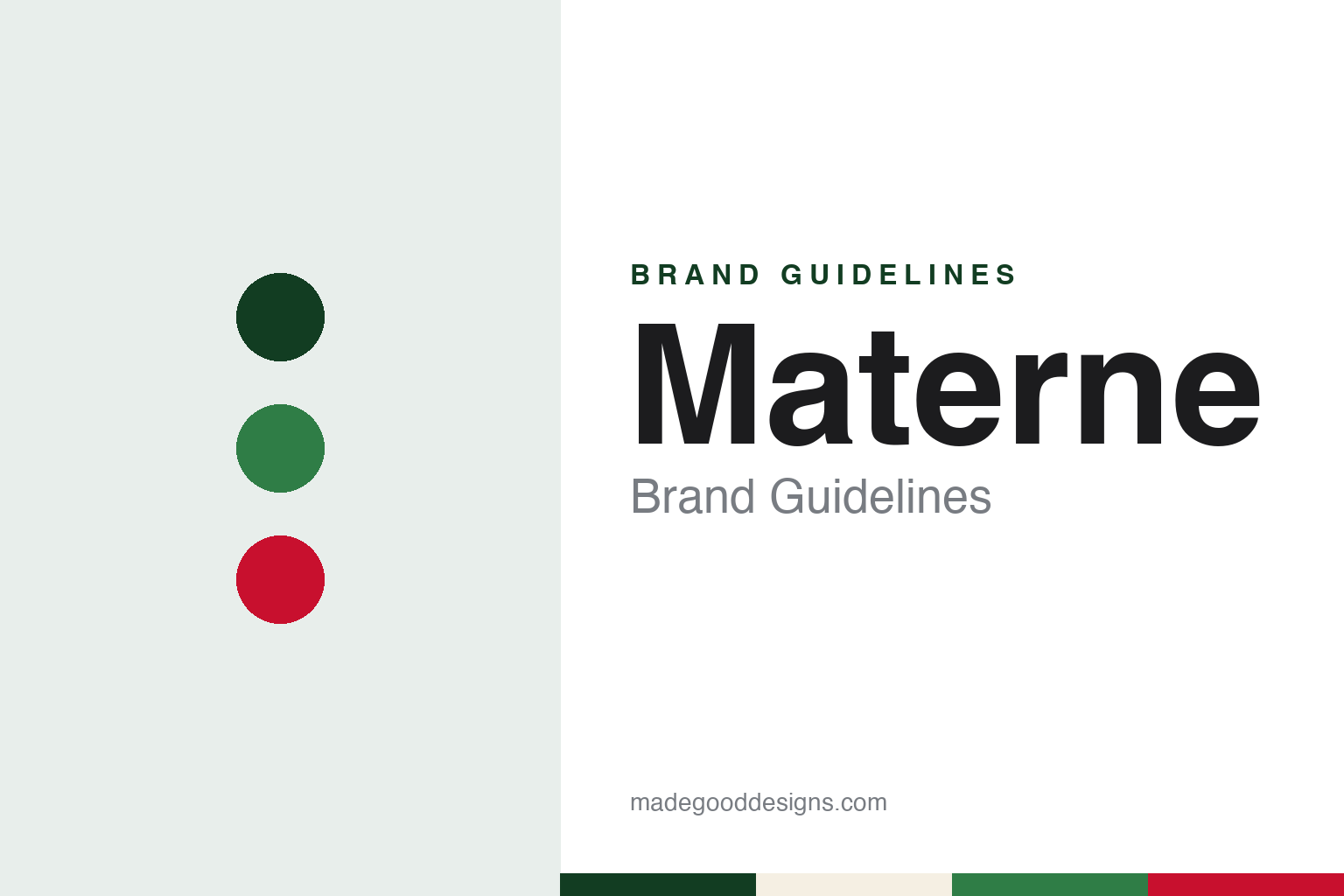
Two constants: a cap green, strawberry red and apple cream palette and a warm breakfast serif register. Abstract homage — not a Materne product or mark; no jar, pouch or logo is reproduced.
Wépion and Jambes
A fruit grower’s firm on the Meuse.
Materne began on the Meuse, just upstream from Namur. French Wikipedia, citing the company, a Belgian business register and the Walloon biographical dictionary Connaître la Wallonie, says Édouard Materne founded his firm on 1 July 1888 at Wépion, a village known for its strawberries, to grow and trade fruit. The Namur newspaper L’Avenir, marking the firm’s 135th year in 2023, named his wife, Julie Dessy, as co-founder. The company says it was growing and selling fruit from the start; French Wikipedia adds that it helped spread strawberry growing at Wépion and market gardening on the nearby Île de Dave, and that it also made fruit syrups.
Industrial production moved across the river to Jambes. French Wikipedia and L’Avenir date the first works there, near the railway station, to 1896; the company’s own timeline gives 1900 for the opening of a factory making apple paste and fruit preserves. According to the local historical society of Jambes, a sugar-duty exemption in 1897 let the firm move into jam, and fruit pastes and tinned fruit followed. Édouard’s son Jean Materne (1889–1964), later a senator and mayor of Jambes, succeeded him; under Jean the firm sold pectin from 1926 and, in 1946, started a frozen fruit and vegetable business, Frima, at Grobbendonk. The company says that by 1938 one Belgian family in three was buying its products.
The family era ended in 1967, when the American conglomerate W. R. Grace took over Materne, according to Grace’s annual report for that year; Grace added Confilux, an apple-paste maker based at Lustin, in 1970. Sources differ on what came next. The Jambes historical society says Brooke Bond Liebig bought Materne-Confilux in 1976 and that a local buyout followed in 1977, after which Materne France and Materne Belgique were separate companies; French Wikipedia gives 1977 for the Liebig purchase and says the French and Belgian businesses were split after BSN-Gervais Danone bought the group in 1982, as Le Monde reported that February. In 1980 the Belgian company moved to a new factory at Floreffe, west of Namur, where it is still based.
Colour
Boué, Danone and the first compote pouch.
The French Materne grew from a factory in the Thiérache, in the north of France. French Wikipedia says a jam works, the Confiturerie de la Thiérache, opened at Boué, in the Aisne, in 1881, and that Édouard Materne bought it in 1922; the Belgian article says Materne rebuilt the factory, which had been destroyed in the First World War, in 1921. Materne built a trade towards Paris and central France from there. In 1989, French Wikipedia says, Danone joined Boué with two other French fruit plants — Lenzbourg in Lyon, which had launched the reduced-sugar Confipote jam in 1979, and Lerebourg at Liverdun — to form Materne-Fruibourg.
Danone sold the French business to the British food group Hillsdown Holdings in 1994, L’Usine Nouvelle reported. In 1998 it launched Pom’Potes, which the company calls the first fruit snack in a pouch, and which LSA describes as the leader of its market. Investment funds followed: Lion Capital in 2004 and Activa Capital in 2006, L’Usine Nouvelle and Les Echos reported, and Activa combined Materne with the dairy-dessert maker Mont Blanc as the MOM group. LBO France took over MOM in 2010, French Wikipedia says.
Pom’Potes crossed the Atlantic as GoGo squeeZ, which the brand dates to a United States launch in June 2008. Its own timeline says the first North American factory opened at Traverse City, Michigan, in November 2011, and a second at Nampa, Idaho, in November 2014.
In October 2016 the cheese maker Bel — the company behind The Laughing Cow — agreed with LBO France to take 65% of MOM, with MOM’s managers keeping the rest; the deal valued MOM at about €850 million, Just Food reported, and it was completed that December. In May 2022 Bel bought the remaining shares, a stake of about 17%, and became sole owner. French Wikipedia gives the French company’s head office as Dardilly, near Lyon, with its factory at Boué.
Typography
Design and documentation.
The seven brands in this group all make jam, preserves or sweet spreads, and they come from France, Belgium, the United States, Britain and Italy: Christine Ferber, Lucien Georgelin, Materne, Sarabeth’s, Mrs Bridges, Thursday Cottage and Nutella. Jam and spread brands in general sit at many different points in the trade, from small kitchens that still carry a founder’s name to names that now belong to much larger food groups, and a single brand can be sold everywhere from a village shop to a supermarket shelf.
A jam or spread brand’s identity is usually carried less by a single recipe than by a jar, a label and the breakfast table it promises, because the company behind the name may have changed hands, moved its kitchens or grown far beyond the place where it started. That makes the questions behind each name worth asking plainly: who started it, who owns it now, and where its jars are actually filled.
Each guide separates what independent sources record from what the company says about itself — its founding story, its owners over time, where its products are made and how its jars and labels have changed — and marks plainly what rests only on the company’s own word.
Aa
A warm breakfast serif for a jam name with two homes. (Specimen set in Fraunces, a serif STAND-IN; NOT the Materne logo.)
Materne
One name, two owners and a green cap.
Today the Materne name is used by two unrelated businesses. In Belgium, Materne-Confilux makes jams, compotes, fruit juices and fruit fillings for pastry at Floreffe. The French fruit group Andros, maker of Bonne Maman, bought into it in 1990, Le Soir reported at the time, and L’Avenir described the company in 2023 as part of the Andros group, employing about 400 people at Floreffe. A 2024 report by the Namur news site Boukè, on a visit by the King and Queen of the Belgians, put the plant’s yearly capacity at about 82,000 tonnes. In France, Materne belongs to Bel and sells compotes, Pom’Potes and Ma Pause Fruit pouches, and Confipote.
On design, the Belgian company says that for its centenary in 1988 it adopted a new graphic identity in which green became the dominant colour, and L’Avenir singles out the green cap on its jars as the brand’s signature. It also says it launched Récolte, a jam dated by harvest year, in 1980, and a pocket-sized fruit pouch in 2001.
The two Materne businesses have since met as rivals. In September 2020 Andros launched what it presented as the first recyclable compote pouch in France; Materne, part of Bel, sued, arguing the claim misled shoppers, and the Lyon commercial court rejected the case in November 2020, Le Monde and LSA reported. The story is told in our Andros guide.
For a design guide, Materne shows how a family fruit name can outlive the family and split along a border, with each half building its own look. Compare Andros, which owns the Belgian company, and its jam brand Bonne Maman. For this guide we use cap green, strawberry red and apple cream with a serif, an unofficial interpretation; no product or logo is reproduced.
Explore & save
Keep Materne’s identity on hand — save it to a board in the Made Good inspiration library.
Materne identity set
Pin the Materne cap green, strawberry red and apple cream palette and the warm breakfast serif register to your own board.