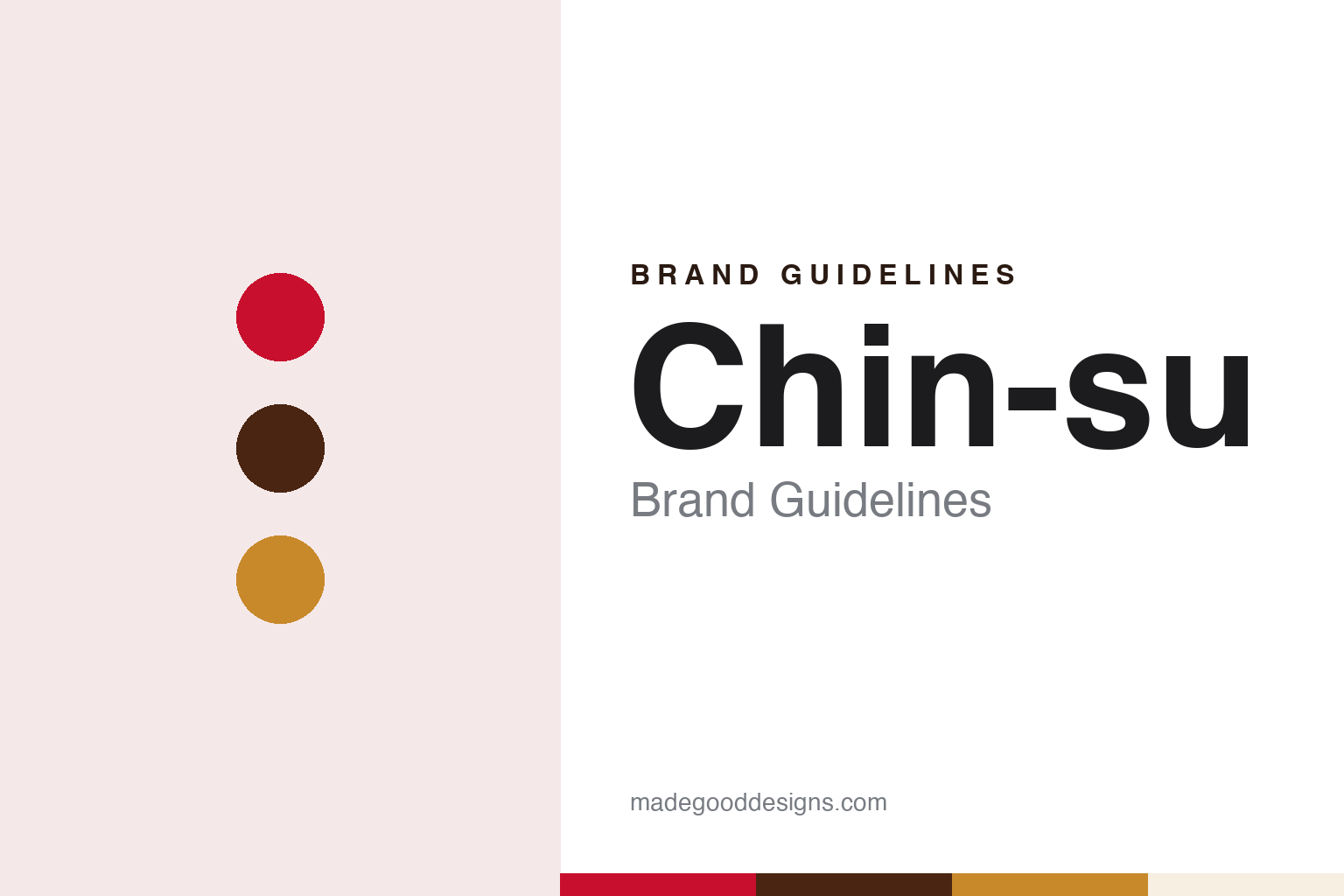
Chin-su Brand Guidelines
Vietnam’s soy, fish and chilli sauce brand from Masan Consumer.
Aa
Two constants: a Chin-su chilli red, soy brown and amber palette and a bold grotesque sans register. Abstract homage — not a Chin-su product or mark; no bottle, logo or label is reproduced.
From Việt Tiến to Masan
A seasoning company that began in 1996.
Chin-su is the sauce and seasoning brand of Masan Consumer, the consumer-goods company within Vietnam’s Masan Group, which was founded by Nguyễn Đăng Quang, its chairman. Masan Consumer, based in Ho Chi Minh City, styles the name in capitals as CHIN-SU, and the brand now covers fish sauce, soy sauce, chilli sauce, seasoning granules and ready-made cooking sauces.
The company’s roots go back to 1996. Masan Consumer’s own history says that in April 1996 Masan set up a company in Russia to import and trade food products in Eastern Europe, and that in June 1996 a joint-stock company called Việt Tiến was founded in Vietnam to make processed foods and seasonings. In May 2000 a trading and import-export company, Minh Việt, followed; in August 2003 Việt Tiến was merged into it and the combined business took the name Ma San. The company describes those early years as a move from a purely export business to the home market.
Chin-su was the first of its big domestic brands. Vietnamese Wikipedia’s article on Masan Consumer dates the launch of Chin-su soy sauce to 2002 and of a premium Chin-su fish sauce to 2003. They were followed in 2007, the same article says, by Nam Ngư fish sauce, Tam Thái Tử soy sauce and Omachi instant noodles, brands that still sit beside Chin-su in the company’s range.
The corporate name changed as the business grew. According to its timeline, the company became Ma San Food in December 2008 and Ma San Consumer in March 2011, and adopted the one-word spelling “Masan Consumer” in June 2015.
Colour
Sauces, seasonings and a Japanese set.
Chin-su today is a broad range rather than a single bottle. Masan Consumer’s brand page lists fish sauces made from anchovy, a soy sauce it says is naturally brewed for 120 days, chilli sauces in sizes from small bottles to catering tubs, tomato ketchup, mayonnaise, seasoning granules, an oyster sauce made with scallop, rice-bran oil and ground black pepper. A newer line, “Xốt Nhà Hàng” — “restaurant sauce” — packs ready-made sauces for dishes such as caramelised braised pork and fish-sauce fried chicken.
Chilli has become a family of its own. In a news item on its website, Masan Consumer describes a sriracha, a hotter sauce sold as Cay 100, and a pair of chilli-salt sauces, the green one for seafood and the red one for grilled food, alongside black pepper from Đắk Lắk province and a sour-and-spicy shrimp salt for dipping fruit.
Masan Consumer’s factory network spans the country. Its website lists plants in Hải Dương and Hà Nam in the north, in Nghệ An, in Bình Dương and Long An in the south, in Hậu Giang in the Mekong Delta and on Phú Quốc island, as well as a food-technology company in Ho Chi Minh City that still carries the Việt Tiến name. The company says it exports to more than 15 countries, naming the United States, China, Japan and South Korea.
In 2023 the brand looked to Japan. Masan Consumer says a Chin-su seasoning set made to Japanese tastes — an anchovy fish sauce, a naturally fermented Japanese-style soy sauce, a wasabi chilli sauce and a seasoning made from shiitake mushroom and kombu kelp — went on sale in Japanese supermarket chains and in Vietnam at the same time, and was shown at the HCM City Export 2023 fair.
Its marketing leans on entertainment. Masan Consumer says Chin-su has appeared alongside television and music programmes popular with young Vietnamese viewers, including the reality show “2 Ngày 1 Đêm” and the variety show “Gia Đình Haha.” The company also says Chin-su was named a “Brand Success Story” in the Brand Footprint Vietnam 2025 report published by Worldpanel by Numerator, and that the report recorded about 800,000 new buyers for the brand in 2024.
Typography
Southeast Asia’s pantry brands.
The seven brands in this group make coffee, tea, noodles and sauces, and they come from Singapore, Indonesia, Japan, Vietnam and Malaysia: Prima Taste, Indocafe, Kopiko, Acecook, Chin-su, OLDTOWN White Coffee and BOH. Drink and food brands of this kind in general sit at many different points in the trade, from family firms that still carry a founder’s name to names that now belong to much larger food groups, and a single brand can be sold everywhere from a coffee shop counter to a supermarket shelf.
A drink or food brand’s identity is usually carried less by a single product than by a pack, a name and the cup or bowl it promises, because the company behind the name may have changed hands, moved its factory or grown far beyond the town where it started. That makes the questions behind each name worth asking plainly: who started it, who owns it now, and where its products are actually made and packed.
Each guide separates what independent sources record from what the company says about itself — its founding story, its owners over time, where its products are made and how its packaging has changed — and marks plainly what rests only on the company’s own word.
Aa
A bold grotesque sans for a capitalised name. (Specimen set in Archivo, a sans STAND-IN; NOT the Chin-su logo.)
Chin-su
One brand in a Masan portfolio.
Masan Consumer sits inside the wider Masan Group. English Wikipedia gives the group’s founding year as 1996 and records its listing on the Ho Chi Minh Stock Exchange on 5 November 2009. In April 2011 the American investment firm KKR bought a 10% stake in Masan Consumer, at the time described as Vietnam’s largest private-equity investment, according to English Wikipedia.
The same year the company moved beyond sauces. Its timeline records the purchase of a 50.25% stake in the coffee maker Vinacafé Biên Hòa in October and November 2011, followed by stakes in the Vĩnh Hảo mineral-water company from 2013 and further food and drinks businesses. In June 2016 it set up a Nam Ngư company on Phú Quốc, the island known for its fish sauce, and in July 2016 a subsidiary in Thailand.
Chin-su now sits in a portfolio that Masan Consumer lists alongside Omachi and Kokomi noodles, Nam Ngư fish sauce, Wake-Up 247 drinks, Vinacafé coffee and Vĩnh Hảo water. The company says it has served Vietnamese consumers for more than 29 years, and sets itself the aim of six billion-dollar brands and a “Go Global” strategy.
For a design guide, Chin-su shows how a single soy sauce can grow into a whole family of condiments carried by one capitalised name. Compare Huy Fong Foods, the Californian chilli-sauce maker, and Vinamilk, another Vietnamese household name. For this guide we use chilli red, soy brown and a warm amber with a sans, an unofficial interpretation; no product or logo is reproduced.
Explore & save
Keep Chin-su’s identity on hand — save it to a board in the Made Good inspiration library.
Chin-su identity set
Pin the Chin-su chilli red, soy brown and amber palette and the bold grotesque sans register to your own board.