La Ibérica Brand Guidelines
Arequipa’s chocolate maker since 1909.
Aa
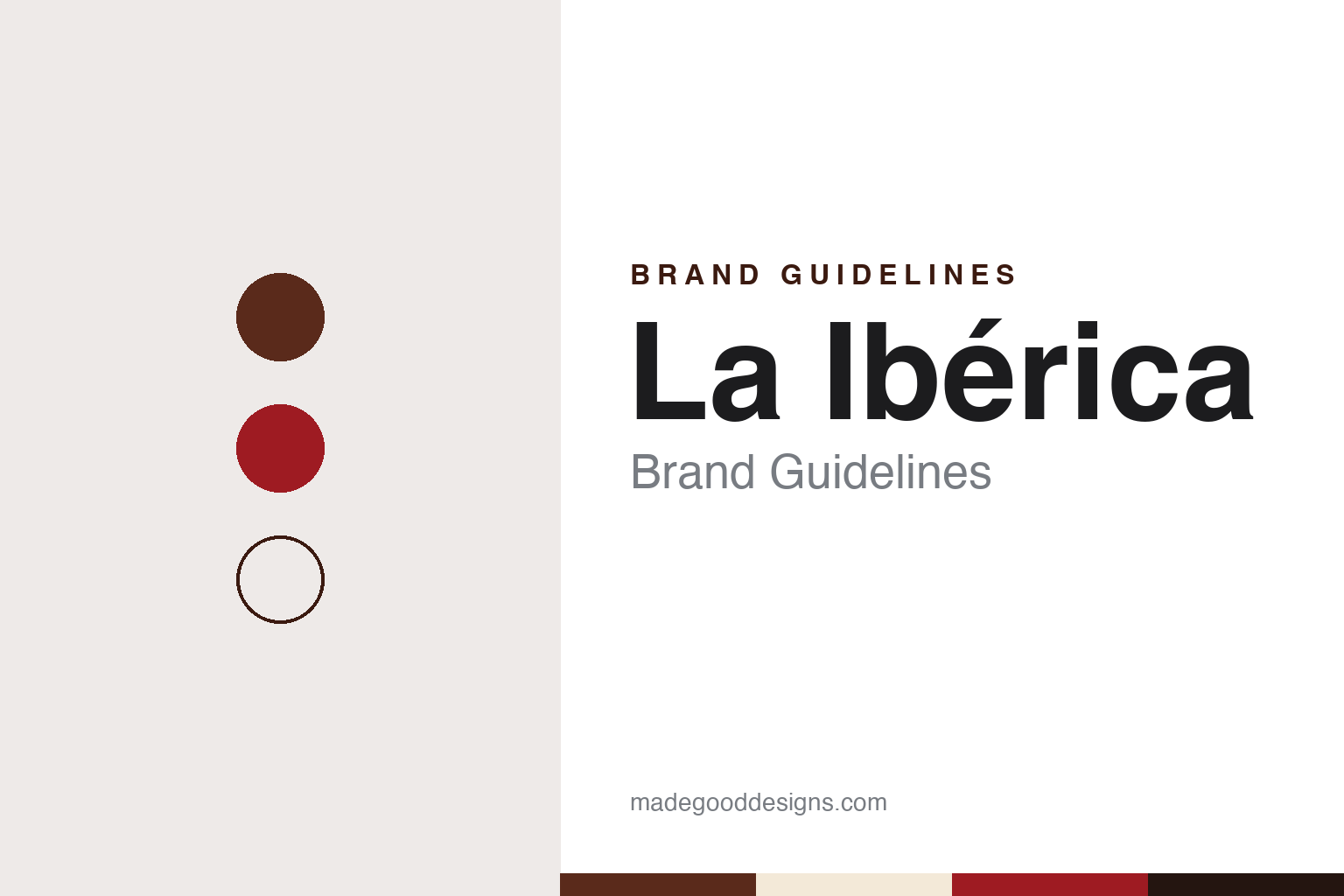
Two constants: a La Ibérica cacao brown, red and cream palette and a classic serif register. Abstract homage — not a La Ibérica product or mark; no wrapper, logo or label is reproduced.
A stone mill in Arequipa
A Bilbao-schooled son and a cup of chocolate.
La Ibérica began in Arequipa, in southern Peru, in 1909. The company’s own timeline names its founder as Juan Vidaurrázaga Menchaca, and in 2015 the Lima newspaper El Comercio described how “the young Spanish businessman Juan Vidaurrázaga” set up the chocolate factory in Arequipa, with chocolate para taza — chocolate for drinking — as its first product.
A longer history published by ADEPIA, the association of companies in the Parque Industrial de Arequipa, fills in the family background. It says his father, the Spaniard Vicente Vidaurrázaga, came to Arequipa through the port of Mollendo on business and settled in the city; that Juan Pablo, as it calls him, was sent as a child to be educated in Bilbao; and that he returned to Peru at his father’s request to help with the family’s businesses. With his father’s backing, ADEPIA says, he went back to Europe for several months to learn confectionery and chocolate making from the basics.
In 1909, according to the same account, he began his first trials of drinking chocolate with a stone grinder, a batán, selecting, roasting, shelling and grinding the cacao beans himself. A few years later he bought an old house in Arequipa, the “casona de Jerusalén,” where the factory worked for more than 80 years, ADEPIA says. The company says the La Ibérica mark was registered in 1912 and that it won a gold medal at a trade fair in Italy in 1927.
Colour
Toffee, turrón and mazapán.
The range grew outward from that drinking chocolate. ADEPIA says milk and fondant chocolate followed within a few years, in pastilles and tablets, then filled bonbons, then a line of toffees — soft milk caramels — a turrón made with toasted Peruvian almonds and honey, and mazapanes, small almond-paste sweets. The company says it registered the first label for its classic tablet of drinking chocolate in 1937.
The cacao, the company says, comes from Peru. ADEPIA’s history ties the business from the start to chuncho cacao from the forests of Cusco. In August 2016 the company’s general manager told the newspaper Diario Correo that La Ibérica used only Peruvian cacao, bought in Ayacucho, Cusco and Tingo María — about 400 tonnes a year — and that it made about a million kilos of chocolates and other sweets a year.
Its sustainability programme, “Un chocolate por el planeta,” says it now works with more than 450 cacao-farming families in the La Convención valley of Cusco, where it runs a post-harvest centre; the selected and processed beans are then sent to its factory in Arequipa. The company also describes an alliance with SERNANP, Peru’s national protected-areas service, on protecting and reforesting land; we give these as its own descriptions.
Production has stayed in Arequipa. When the old house ran out of room, the factory moved to the Parque Industrial de Arequipa — in 1992, according to ADEPIA, while the company’s timeline dates the opening of its current factory to 1993. The company says the plant is not open to visitors, citing its manufacturing and food-safety rules.
Today it sells several lines, among them La Ibérica Clásica, La Ibérica Chocolatier, Milky and Fondy. The company says its milk chocolates contain 38% cacao and its fondant 52%, and that its Chocolatier tablets run from 44% to 73%.
Typography
Chocolate makers around the world.
The seven brands in this group all make chocolate, and they come from six countries on four continents: Ganong and Chocolats Favoris from Canada, Abuelita from Mexico, La Ibérica from Peru, Glico from Japan, Orion from the Czech Republic and Simón Coll from Spain. Read together, they show how differently a chocolate name can be built, kept and presented from one market to the next.
A chocolate brand can belong to the family that started it or to a group that bought it later, and the name on the wrapper and the company that owns it are not always the same thing. It can be known for bars and boxed chocolates, for a drink or for a seasonal novelty, and its packaging can draw on very different local traditions. Each guide looks at how one brand’s own history shows up in what it puts on the shelf.
Each guide also separates what independent sources record from what the company says about itself — who founded it, who owns it now, where its cocoa comes from and where its chocolate is made — and marks plainly what rests only on the company’s own word.
Aa
A classic serif — for a maker whose first product was a tablet of drinking chocolate. (Specimen set in Cormorant Garamond, a serif STAND-IN; NOT the La Ibérica logo.)
La Ibérica
A family company that stayed in Arequipa.
La Ibérica describes itself as a company “founded by a family” and calls itself “the sweetest tradition” of Arequipa; ADEPIA’s history is headlined “a family company with more than a century of history.” Its website does not set out who its shareholders are. In 2015 El Comercio included it in a list of Peruvian consumer brands more than a century old, a list that also took in D’Onofrio, the Lima confectioner that the paper noted had been bought by Nestlé after long negotiations.
Its growth has come largely through its own shops. The company dates its first shopping-mall store, at Mall Plaza Cayma in Arequipa, to 2002, and its first Lima store, on Avenida La Marina, to 2005. In November 2015 La República reported that the brand planned to sell in Chile, and quoted its commercial head as saying that 40% of sales came from its own shops; in 2016 Diario Correo reported a network of 23 of them. The company says it began taking the brand abroad in Florida in 2020, opened its own shops in Santiago de Chile in 2022 and a travel-retail format in 2025, and that 18 of its products were recognised by the International Taste Institute in Brussels in 2022. It sells online in Peru and through a separate Chilean web shop, and says it does not currently ship abroad.
For a design guide, La Ibérica shows how a regional maker can build a national brand on its home city and a product it has made since 1909. Compare Cacaosuyo, a Peruvian bean-to-bar maker, and Abuelita, another name built on tablets of drinking chocolate. For this guide we use cacao brown, a deep red and cream with a serif, an unofficial interpretation; no product or logo is reproduced.
Explore & save
Keep La Ibérica’s identity on hand — save it to a board in the Made Good inspiration library.
La Ibérica identity set
Pin the La Ibérica cacao brown, red and cream palette and the classic serif register to your own board.