Novita Brand Guidelines
The 1928 Helsinki wool mill that still spins at Koria.
Aa
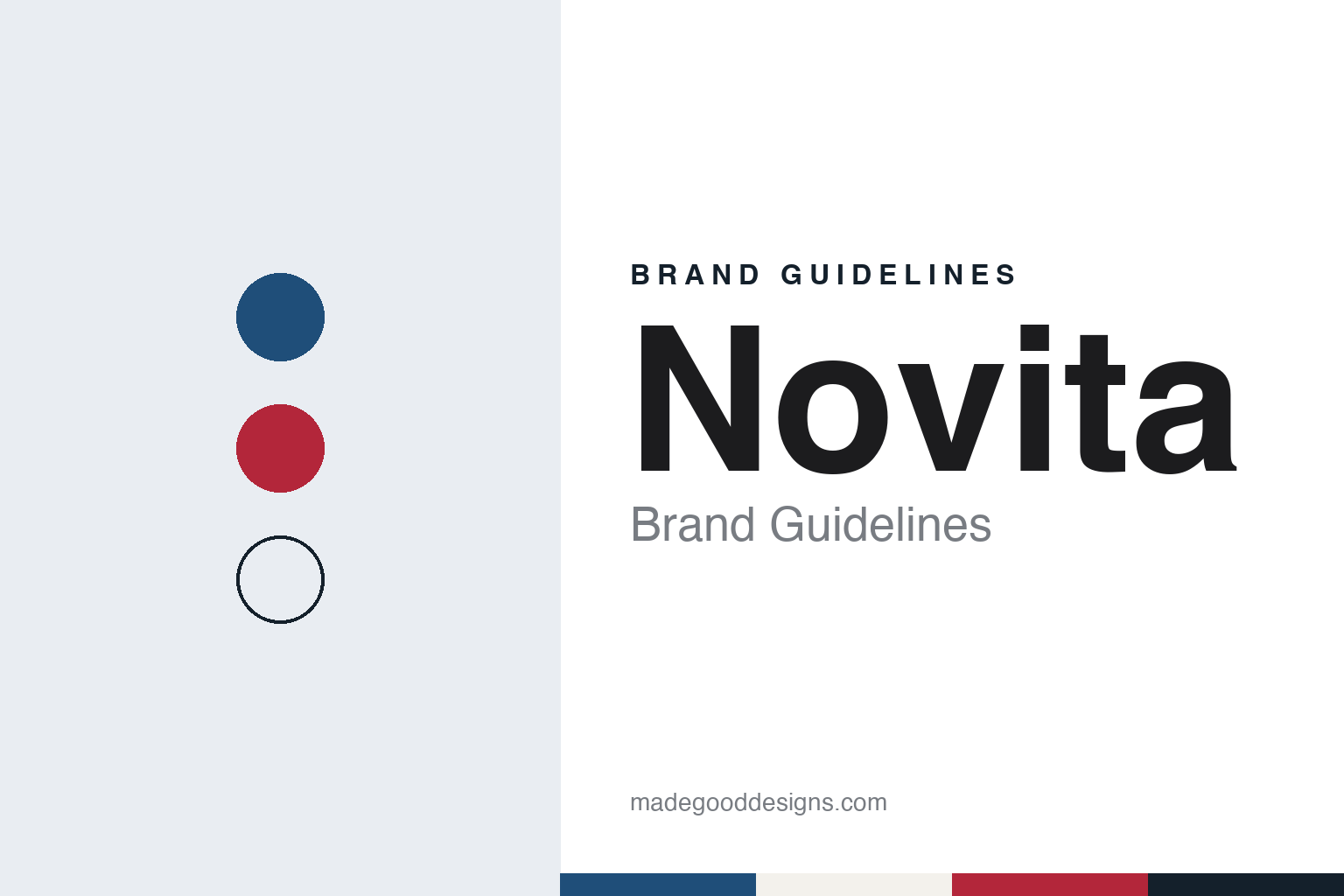
Two constants: a Novita lake blue, birch white and lingonberry palette and a Nordic sans register. Abstract homage — not a Novita product or mark; no ball band, logo or pattern is reproduced.
Helsingin Villakehräämö
A Bradford training and a Helsinki spinning mill.
Novita began in Helsinki in 1928 as Helsingin Villakehräämö Oy, the Helsinki Wool Spinning Mill. Its founder, Ernst Gylfe, had run a large carded-yarn spinning mill at Klingendahl, in Tampere, according to Finnish Wikipedia, which cites the business magazine Talouselämä and the newspaper Helsingin Sanomat. He wanted to build something Finland did not yet have — a mill for worsted, or combed, yarn, which is smoother than carded yarn — and spent two years in Bradford, the centre of England’s wool trade, learning the technique before he returned to set up the company.
Spinning began in Helsinki’s Merikaapelihalli, the sea-cable hall that is now the Merikortteli block. In 1935 Gylfe bought a plot on the island of Lauttasaari, and a red-brick mill at Vattuniemi was completed in 1947, Finnish Wikipedia says. During the war the mill ran out of wool; according to the same account nobody was laid off, and staff knitted socks for the front from viscose obtained from Sweden.
The founder’s son, Bosse Gylfe, a textile engineer, ran the business next and built up the company’s links with foreign wool suppliers. In 1974 spinning moved out of Helsinki to Koria, then in the municipality of Elimäki and now part of the city of Kouvola; marketing, purchasing and product design stayed in Helsinki. The Finnish broadcaster Yle reported in January 2025 that Novita had owned the Kouvola mill for 50 years. The old name survives as an auxiliary trade name of Novita Oy, which is still headquartered in Helsinki.
Colour
Seven Brothers, mohair and Moomins.
Novita’s best-known yarn is a sock yarn. 7 Veljestä, “Seven Brothers,” is named after Aleksis Kivi’s 1870 novel, a classic of Finnish literature; Finnish Wikipedia, citing the company and the tabloid Iltalehti, says it began as a sales representative’s suggestion for a thicker companion to the Nalle sock yarn, and was first sold in seven colours named after the brothers. Wool socks are still the most popular knitting project, the Koria mill’s manager told Yle in 2025.
The business has followed knitting’s ups and downs. In the 1980s a third-generation family member bought the company out, and the decade’s fashion for mohair pushed exports to as many as 15 countries before knitting fell out of favour in the 1990s, Finnish Wikipedia says, citing Helsingin Sanomat. From 1998 the company began releasing yarns in fashion colours and selling a way of life rather than a product, the same account says. A fourth-generation family member became chief executive in 2010.
At its largest Novita dominated its home market: Talouselämä put its Finnish market share at about 90 per cent in 2014, and annual output at about ten million balls, roughly a million kilograms of yarn. Exports were small — about 5 per cent of sales in 2016–2019, mostly to Sweden. In 2018 it signed a deal with the British department store John Lewis, which began selling its yarns that autumn, the business daily Kauppalehti reported; in 2019 it added British online retailers and the Japanese craft chain Yuzawaya. That January it announced Moomin yarns under licence from Moomin Characters, an idea that came, Finnish Wikipedia says, from 1970s “Moominmamma baby yarn” ball bands found in the company archive. The same year it closed its clothing wholesale business to concentrate on yarn.
Typography
Yarn and its makers.
The seven brands in this group all sell yarn for hand knitting and crochet, and they come from seven countries: Novita from Finland, Järbo from Sweden, Alize from Turkey, Hamanaka from Japan, Adriafil from Italy, Wool and the Gang from the United Kingdom and Knit Picks from the United States. Set side by side, they show two quite different ways of putting a ball of yarn in front of a knitter.
One is the national yarn maker: a name that grew up in a single country, sold through that country’s department stores, craft shops and yarn shops, and often found in homes for generations. The other is the brand built around the buyer rather than the shop — one that sells online or by catalogue, or packs yarn, needles and a pattern together as a kit, and talks to knitters directly. The first kind tends to lean on heritage and place; the second on convenience, price or a sense of belonging to a community. Each route shapes a brand’s name, its labels and the voice it uses.
Each guide also separates what independent sources record from what the company says about itself — who founded it, who owns it now and where its yarn is made — and marks plainly what rests only on the company’s own word.
Aa
A clean Nordic sans for a Finnish household name. (Specimen set in Work Sans, a sans STAND-IN; NOT the Novita logo.)
Novita
A Finnish mill and an English one.
Novita is still family-owned, according to Finnish Wikipedia and Yle. In 2023 it appointed Mikko Koponen as chief executive, the press-release service STT Info announced. By then the pandemic knitting boom was fading. Output at Koria, about nine million balls a year at the peak, had fallen to about seven million, and 2024 ended in a loss, Yle reported.
In January 2025 the company opened consultations covering 44 of its 63 staff and proposed moving spinning and dyeing to West Yorkshire in England, leaving Koria to wind and pack the yarn. The reason was a second mill: Yle reported that Novita’s owners also own a modern spinning mill there, operating since 1997, which already produced part of Novita’s yarn, and which Yle later named as West Yorkshire Spinners. Koponen told Yle that spinning and dyeing in England would be more efficient and cheaper, that Koria’s equipment was ageing, and that Novita is “the world’s largest buyer of English hand-knitting wool” — his claim. In March 2025 the talks ended with all Koria jobs kept and four roles cut at the Helsinki office, and a decision put off to the turn of the year. In November 2025 Yle reported that spinning and dyeing would continue at Koria as before, with all 33 factory staff; the factory manager said customers value domestic production.
“Made in Finland” here means spun and dyed in Finland, not Finnish wool. The raw wool comes mainly from England, and the factory manager told Yle that no Finnish wool was in production because there is too little of it and no industrial wool-scouring plant in Finland.
For a design guide, Novita shows how a national household brand can rest on one sock yarn and a mill town. Compare Ístex, Iceland’s farmer-owned wool mill, and Sandnes Garn, a Norwegian mill still spinning at home. For this guide we use lake blue, birch white and a lingonberry red with a sans, an unofficial interpretation; no product or logo is reproduced.
Explore & save
Keep Novita’s identity on hand — save it to a board in the Made Good inspiration library.
Novita identity set
Pin the Novita lake blue, birch white and lingonberry palette and the Nordic sans register to your own board.