Summerbird Brand Guidelines
The Assens chocolatier that put its butterflies in a plain white box.
Aa
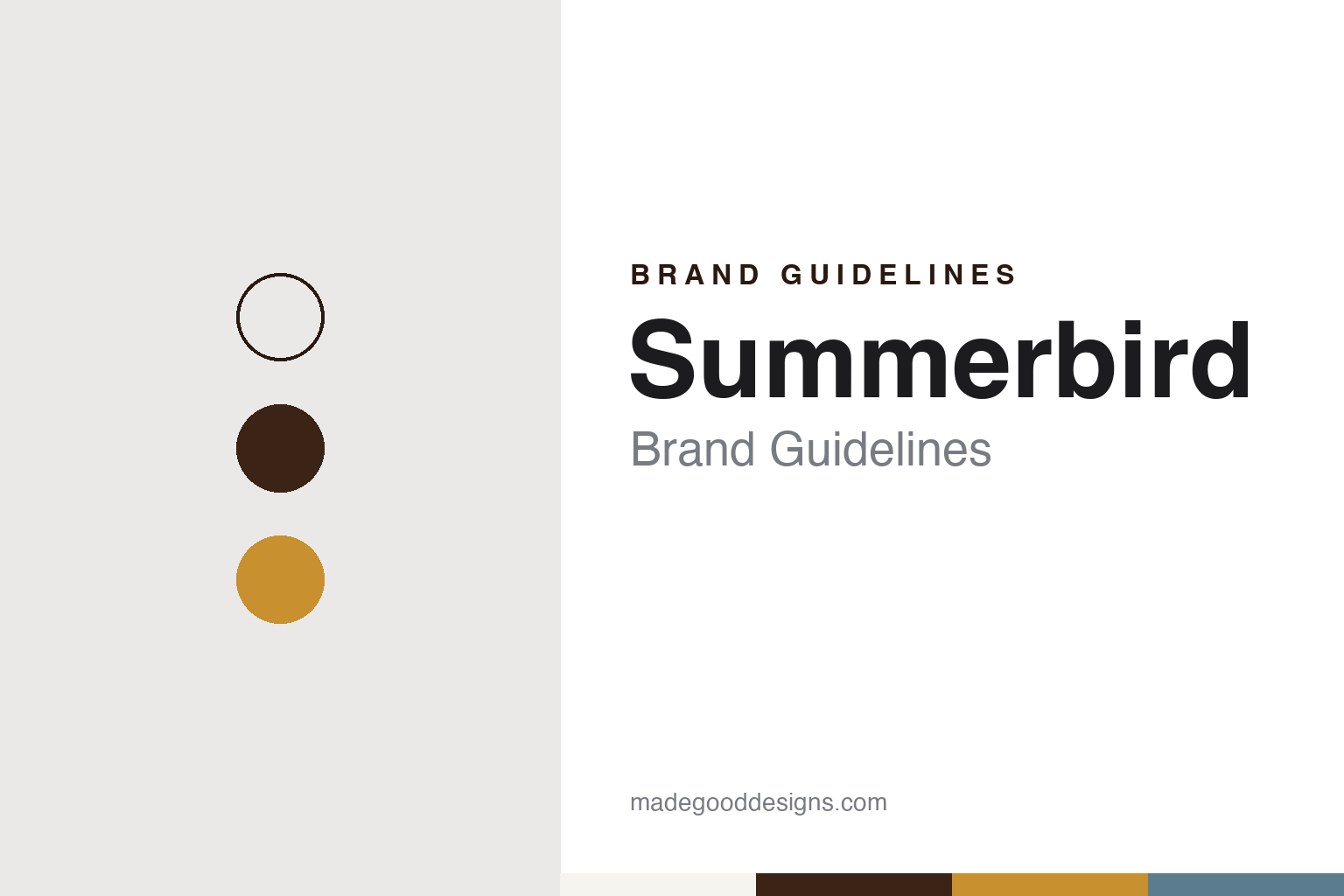
Two constants: a Summerbird white, cocoa and amber palette and a Clean geometric sans register. Abstract homage — not a Summerbird product or mark; no box, logo or chocolate is reproduced.
A butterfly from Funen
A restaurant family, a marzipan and a chocolate butterfly.
Summerbird was founded in 1986 in Assens, on the west coast of Funen, by Mikael Grønlykke, Danish Wikipedia says. His parents, Sven and Lene Grønlykke, had founded the Løgismose group in 1969 to promote quality food, and in the 1980s they wanted good chocolate for their range; Mikael Grønlykke and his mother set about developing a dessert chocolate. The company’s own history adds that the family was behind the restaurants Falsled Kro and Kong Hans, and says the parents brought Denmark its first Michelin star.
The company tells the origin as a marzipan story. It says the family was developing a cake with marzipan as its main ingredient, found the marzipan on the market artificial in taste, and decided to make its own: Mikael Grønlykke, a trained chef, went to Valencia for almonds, rolled them fine and mixed them with a little sugar. The result, the company says, was too good to hide in a cake, so it was paired with chocolate instead. For the chocolate itself the company says it found a small family-owned maker south of Lyon, in France, and worked with it on a couverture to suit the marzipan; it does not name that maker, and nor do we.
The first product was a chocolate butterfly — marzipan covered in a thick layer of dark chocolate — and, Danish Wikipedia says, the butterfly shape gave the company its name. According to the company, the first white box carried the words “Only Nature’s Ingredients.” Production began in the disused dairy at Haarby, a little east of Assens, Danish Wikipedia says.
Colour
White boxes, cream puffs and a chocolate called Amber.
Summerbird’s look is largely its packaging. In 1991, the company says, it developed its own design world: chalk-white boxes with no print and no colour, a deliberate break with the heavy, dark confectionery packaging of the day. When the business outgrew the old dairy, it built new premises on a hilltop in Assens overlooking the Little Belt in 2000, and the company says the buildings were shaped after the forms of its white boxes. In 1996, it says, it received a diploma of honour from the Danish Gastronomic Academy.
The range grew in steps the company dates itself. In 2001 it opened a shop in Copenhagen built around dark chocolate and the cocoa bean, which it calls Denmark’s first niche chocolate shop. In 2002 came the Grand Cru flødebolle, the Danish chocolate-coated marshmallow treat, here on a soft marzipan base of Spanish almonds with a vanilla foam; the company says it opened the way for a new generation of high-quality flødeboller. In 2005 it revived chocolate-coated dragée almonds, a category it describes as forgotten, with Raspberry Red and Liquorice: lightly roasted Spanish almonds in milk chocolate, dusted with raspberry or liquorice.
In 2015 it launched Amber, a golden chocolate it describes as neither white nor dark, with a texture it compares to crème brûlée, in three versions — Amber Classic, Amber Blond and Amber Noir. The company calls Amber its first patented chocolate; we have not checked the patent. Today Amber also forms the base of its caramels and coats its dragée almonds and nuts, the company says.
Typography
Danish chocolate, from department stores to estates.
The seven brands in this group all sell chocolate, and they come from three countries: Cémoi, Jeff de Bruges, Monbana and À la Mère de Famille from France, Summerbird and Peter Beier from Denmark, and Puccini Bomboni from the Netherlands. They sit at different points in the chocolate trade, from names found on supermarket shelves and in shopping-centre chains to single shops known mainly to the people who walk past their windows.
Some of these businesses are manufacturers, buying cocoa or chocolate in bulk and turning it into bars, drinks and seasonal shapes sold far from where they are made. Others are chocolatiers, who buy finished chocolate from a supplier and use it to make bonbons, truffles and filled pieces by hand, and whose identity rests on a shop, a recipe and a family name as much as on any wrapper. Many sit somewhere between the two, running workshops and shops at once.
Each guide separates what independent sources record from what the company says about itself — who founded it, who owns it now, where its cocoa comes from and where its chocolate is made — and marks plainly what rests only on the company’s own word.
Aa
A clean geometric sans — a nod to the unprinted white box. (Specimen set in Jost, a sans STAND-IN; NOT the Summerbird logo.)
Summerbird
Organic, roasted on Funen.
The larger change came with organic production. The company says it began moving to organic ingredients in 2010; in 2014 the switch was complete and, the company says, it took the name Summerbird Organic. Danish Wikipedia, citing Berlingske Business of September 2014, also dates the completed transition to 2014. Since then, the company says, all its products have been organic.
The same project brought roasting in-house. In 2012, the company says, it began building its own cocoa-bean roastery in Assens, finished in 2014. It says it spent three to four years looking for machines and found three roasters close to a hundred years old in Italy, which were taken apart, restored and rebuilt with modern controls; they run more slowly than modern roasters, it says, and it calls the roastery perhaps its most important asset. Most of its dark chocolates, the company says, are based on Arriba Nacional beans grown along the Guayas River in Ecuador, bought directly from smaller farming cooperatives; it names cooperatives in Peru and Ecuador as its bean sources, Piedmont hazelnuts for its nougat and croquant, and Spanish almonds for its marzipan and dragées.
Summerbird sells mainly in Denmark, Danish Wikipedia says, with limited exports. The website, run by Summerbird A/S of Assens, lists its own chocolateries in Copenhagen — including Torvehallerne and the Magasin department store on Kongens Nytorv — at Copenhagen Airport, and in Lyngby, Odense and Aarhus, and says specialist shops across the country also stock the range. It quotes Mikael Grønlykke as founder, and its history describes the company as led by him; it does not set out an ownership history, and we have not found one in the sources we checked.
For a design guide, Summerbird shows how far restraint can carry a confectionery brand: a white box with almost nothing on it, chosen at a time when chocolate packaging was dark and ornate, and kept for decades. Compare Anthon Berg, the Copenhagen marzipan and chocolate house, and Peter Beier, another Danish chocolatier that grew its own shops. For this guide we use white, cocoa brown and an amber gold with a geometric sans, an unofficial interpretation; no product or logo is reproduced.
Explore & save
Keep Summerbird’s identity on hand — save it to a board in the Made Good inspiration library.
Summerbird identity set
Pin the Summerbird white, cocoa and amber palette and the Clean geometric sans register to your own board.